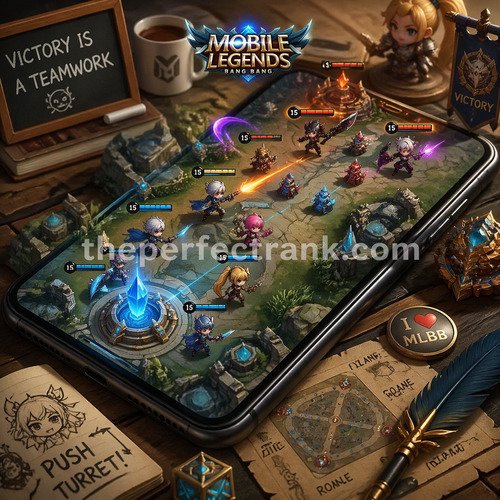
theperfectrank.com – Mobile Legends: Bang Bang continues to evolve as one of the most competitive mobile MOBAs, where hero selection, timing, and team coordination define every match. Behind every victory lies not only mechanical skill but also a deep understanding of how heroes function within the ecosystem of roles, map pressure, and synergy. Each hero is a tool with a specific purpose, and the way that tool is used determines whether a team dominates or collapses under pressure.
This guide explores hero categories, strategic gameplay layers, and advanced decision-making principles that shape how matches unfold from early skirmishes to late-game decisive fights.
The Foundation of Hero Roles and Battlefield Function
Every hero in Mobile Legends is built around a core identity that determines their strengths, weaknesses, and overall contribution to the team. Understanding these identities is the first step toward consistent performance, especially when adapting to different team compositions and enemy strategies.
Fighters are designed to thrive in extended engagements where burst damage alone is not enough to decide outcomes. Their hybrid nature allows them to absorb damage while still applying steady offensive pressure. In most matches, Fighters occupy side lanes where they can safely scale while occasionally joining skirmishes.
What makes Fighters particularly dangerous is their ability to gradually tilt fights in their favor. They may not eliminate enemies instantly, but their sustained damage combined with durability allows them to outlast opponents in drawn-out battles. In team fights, Fighters often function as secondary initiators or disruptors, stepping into the enemy formation after Tanks engage.
A well-played Fighter understands rhythm rather than aggression. Instead of forcing fights, they wait for key cooldowns to be used, then strike at moments when enemy formations are weakened. This patience often determines whether they become frontline threats or easily neutralized targets.
Assassins and the Discipline of Precision Execution
Assassins operate under a completely different philosophy. Their strength lies in precision, timing, and the ability to eliminate priority targets before the enemy can react. Unlike Fighters, they avoid prolonged combat and instead rely on short, explosive engagements.
In practical gameplay, Assassins spend most of their time observing the map rather than fighting. They track enemy positioning, wait for key abilities to be used, and then strike at vulnerable backline heroes. A successful assassination is rarely about brute force; it is about identifying the exact moment when an enemy is isolated or distracted.
However, Assassins are highly punishing to misplay. A single failed dive can result in immediate collapse, especially in coordinated team environments. This makes map awareness, patience, and target prioritization far more important than mechanical execution alone.
Tanks as the Structural Core of Every Engagement
Tanks are the backbone of team stability. Their role is not to deal damage but to create structure, absorb pressure, and initiate fights on favorable terms. Without Tanks, most teams struggle to coordinate engagements or protect high-value damage dealers.
A strong Tank player controls the pace of the game. They dictate when fights begin, where enemies are forced to move, and how space is created for allies. Through crowd control abilities and frontline presence, Tanks disrupt enemy formations and force mispositioning.
The most effective Tanks are those who think ahead of the fight rather than reacting to it. They anticipate enemy rotations, predict burst timings, and position themselves to absorb crucial damage while enabling teammates to follow up safely.
Strategic Gameplay Layers That Define Match Outcomes
Hero knowledge alone is not enough to win consistently. Mobile Legends requires players to understand macro-level strategies, including map control, rotation timing, and objective prioritization. These elements shape the flow of every match.
The early game is where structure begins to form. Every decision made during this phase influences resource distribution and tempo control. Proper lane assignment ensures that heroes reach their intended power spikes without unnecessary delay.
Marksmen typically occupy the Gold lane to accelerate item progression, while Fighters dominate the EXP lane to gain levels and durability. Mages control mid lane due to their wave clear and rotation potential, allowing them to influence multiple areas of the map.
Early game success is not defined by aggression alone. In many cases, controlled farming and vision control are more valuable than early kills. Securing minion waves, denying jungle resources, and maintaining lane pressure gradually build a foundation for mid-game dominance.
Mid Game Rotations and Objective Domination
As the game transitions into the mid phase, mobility and coordination become essential. Teams begin to group, contest objectives, and apply pressure across multiple lanes. This is where rotations determine map control.
Efficient rotations are not random movements but calculated decisions based on wave states and enemy positioning. A well-timed rotation can secure objectives such as Turtle or result in turret destruction, both of which significantly shift momentum.
Objectives are central to mid-game strategy because they convert small advantages into long-term control. Teams that consistently secure objectives force opponents into defensive positions, limiting their ability to scale or respond effectively.
Late Game Precision and High-Stakes Execution
The late game represents the most unforgiving stage of Mobile Legends. At this point, damage output is extremely high, and even minor mistakes can lead to immediate defeat. Positioning becomes the most critical factor for survival and success.
Team fights in the late game are often decided before they begin. Proper vision control, cooldown tracking, and formation discipline determine whether a fight is winnable. Engaging without preparation often results in instant collapse.
Successful late-game execution relies on patience. Teams wait for key enemy abilities to be used or for positioning mistakes before committing to full engagements. One well-executed fight can end the game due to the speed of turret destruction and respawn timers.
At higher levels of play, Mobile Legends becomes less about individual performance and more about coordination, adaptability, and understanding evolving game conditions. Hero synergy and strategic awareness play a decisive role in determining outcomes.
Team Composition Synergy and Role Interaction
A strong team composition is not just about selecting powerful heroes but ensuring that their abilities complement each other. Proper synergy allows teams to execute coordinated strategies with higher efficiency and consistency.
For example, Tanks with strong crowd control abilities create opportunities for Mages and Assassins to deal burst damage safely. Fighters extend engagements, allowing Marksmen to scale damage over time. Each role supports the others in a structured system of interaction.
When synergy is ignored, even strong individual heroes can feel ineffective. Misaligned compositions often lack initiation, damage balance, or sustain, leading to predictable losses in coordinated fights.
Meta Awareness and Adaptive Hero Selection
The meta in Mobile Legends is constantly shifting due to balance updates, item adjustments, and evolving strategies. Heroes that dominate one patch may become less effective in the next, requiring players to adapt continuously.
Understanding the meta is not just about knowing which heroes are strong, but why they are strong. Some heroes rise due to item efficiency, while others benefit from changes in gameplay tempo or map objectives.
Adaptive players do not rely on a fixed hero pool. Instead, they adjust their selections based on team composition, enemy draft, and current patch conditions. This flexibility is essential for long-term success in ranked and competitive play.
Communication, Awareness, and Win Condition Awareness
Communication is the invisible layer that connects all strategic elements. Even simple information such as enemy location or cooldown status can significantly influence decision-making across the team.
Map awareness enhances this communication by allowing players to anticipate threats before they occur. Constantly tracking enemy movement enables better rotation decisions and reduces the risk of ambushes.
Every match also has a win condition, whether it is early aggression, mid-game control, or late-game scaling. Recognizing and committing to this win condition ensures that teams play with purpose rather than reacting blindly to situations.
Conclusion Mobile Legends Heroes and the Art of Battlefield Mastery: A Complete Strategic Guide
Heroes in Mobile Legends are more than just characters with abilities; they are strategic tools that define how battles are fought and won. Fighters provide durability and sustained pressure, Assassins deliver precision elimination, Tanks create structure, and other roles contribute to a balanced ecosystem of synergy and timing.
Success in the game comes from understanding how these roles interact, how the map evolves over time, and how decisions influence long-term outcomes. Players who learn to adapt, communicate, and execute strategies based on win conditions consistently outperform those who rely only on mechanics.
Ultimately, mastery in Mobile Legends is not about playing a single hero perfectly, but about understanding the entire battlefield and making every hero work together toward one goal: victory.
